
กองการต่างประเทศ


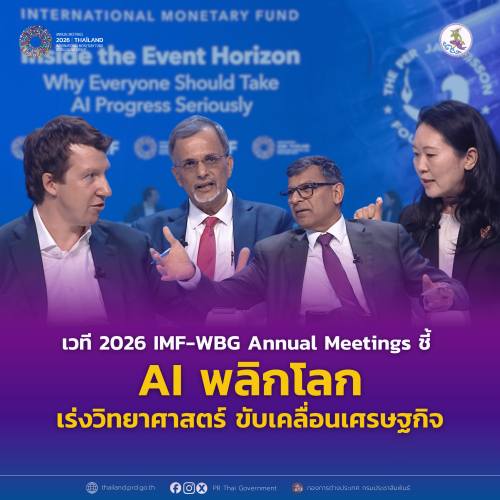
บ่ายวันนี้ (วันที่ 17 ตุลาคม 2569) มีการเสวนาหัวข้อ “Inside the Event Horizon: Why Everyone Should Take AI Progress Seriously” หรือ “ก้าวสู่จุดเปลี่ยนของ AI: ทำไมทุกคนต้องให้ความสำคัญกับความก้าวหน้าของเทคโนโลยีนี้” ในห้วงการประชุมประจำปีสภาผู้ว่าการกองทุนการเงินระหว่างประเทศและกลุ่มธนาคารโลก ปี 2569 หรือ 2026 IMF-World Bank Group Annual Meetings เพื่อแลกเปลี่ยนมุมมองเกี่ยวกับพัฒนาการของปัญญาประดิษฐ์ (AI) และผลกระทบต่อเศรษฐกิจโลก ความก้าวหน้าทางวิทยาศาสตร์ ตลาดแรงงาน และการกำหนดนโยบายสาธารณะ โดยมี Jack Clark ผู้ร่วมก่อตั้ง Anthropic เป็นผู้บรรยายหลัก พร้อมด้วย Yan Shen จากมหาวิทยาลัยปักกิ่ง และ Dr. V. Anantha Nageswaran ที่ปรึกษาด้านเศรษฐกิจหลักของรัฐบาลอินเดีย ร่วมอภิปราย และมี Raghuram Rajan อาจารย์จากมหาวิทยาลัยชิคาโกและอดีตหัวหน้านักเศรษฐศาสตร์ของ IMF ทำหน้าที่ผู้ดำเนินรายการ
Jack Clark กล่าวว่า AI มีศักยภาพในการเร่งความก้าวหน้าทางวิทยาศาสตร์และเทคโนโลยีอย่างก้าวกระโดด โดยเริ่มมีบทบาทในการแก้ปัญหาทางคณิตศาสตร์ การวิจัยด้านชีววิทยา การค้นคว้าพัฒนายา และการทำงานในห้องปฏิบัติการ ซึ่งอาจช่วยเพิ่มผลิตภาพและเปิดโอกาสให้เกิดนวัตกรรมใหม่ ๆ อย่างไรก็ตาม ความก้าวหน้าดังกล่าวยังมาพร้อมความท้าทาย ทั้งด้านความมั่นคงปลอดภัยทางไซเบอร์ ผลกระทบต่อตลาดแรงงาน และความจำเป็นในการกำหนดมาตรการกำกับดูแลที่เหมาะสม เพื่อให้สามารถใช้ประโยชน์จากเทคโนโลยีได้อย่างปลอดภัยและมีประสิทธิภาพ
ด้าน Yan Shen กล่าวถึงการประยุกต์ใช้ AI ในจีน ทั้งภาคการผลิต การบริหารจัดการธุรกิจ และบริการสุขภาพ ซึ่งช่วยเพิ่มประสิทธิภาพการดำเนินงานและสร้างโอกาสทางเศรษฐกิจใหม่ ขณะที่ Dr. V. Anantha Nageswaran เน้นว่า แม้ประเทศที่ไม่ได้เป็นผู้นำด้านการพัฒนา AI ระดับแนวหน้าก็สามารถได้รับประโยชน์จากเทคโนโลยีได้ ผ่านการเลือกใช้ AI ที่มีต้นทุนเหมาะสมและการขยายการใช้งานในภาคส่วนต่าง ๆ ควบคู่กับการพัฒนาทักษะแรงงานและการสร้างโอกาสในการจ้างงานให้สอดคล้องกับเศรษฐกิจที่เปลี่ยนแปลงไป
ผู้ร่วมอภิปรายยังเน้นย้ำถึงความสำคัญของความร่วมมือระหว่างประเทศในการกำหนดมาตรฐานความปลอดภัย ความโปร่งใส และการกำกับดูแล AI เพื่อรับมือกับความเสี่ยงที่อาจส่งผลกระทบข้ามพรมแดน พร้อมเสนอให้ระบบการศึกษามุ่งพัฒนาความคิดสร้างสรรค์ การคิดวิเคราะห์ การตั้งคำถาม และจริยธรรม ควบคู่กับการเตรียมความพร้อมด้านแรงงาน โดยเห็นว่า AI อาจเป็นแรงขับเคลื่อนสำคัญของความก้าวหน้าทางวิทยาศาสตร์และเศรษฐกิจโลก แต่การสร้างประโยชน์จากเทคโนโลยีอย่างทั่วถึงและยั่งยืน จำเป็นต้องอาศัยการตัดสินใจของมนุษย์ การเตรียมพร้อมเชิงนโยบาย และความร่วมมือจากประชาคมโลก
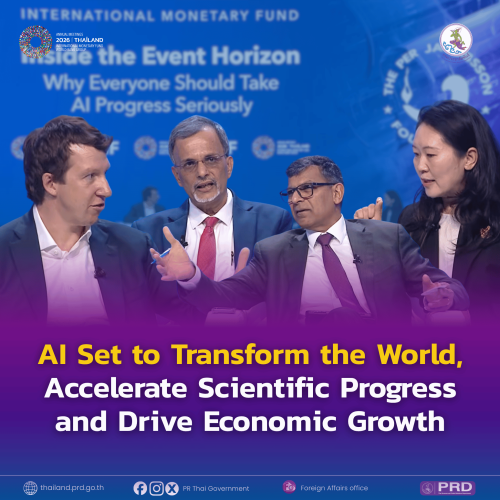
2026 IMF - WBG Annual Meetings: AI Set to Transform the World, Accelerate Scientific Progress and Drive Economic Growth
This afternoon (17 October 2026), a discussion titled “Inside the Event Horizon: Why Everyone Should Take AI Progress Seriously” was held as part of the 2026 IMF - World Bank Group Annual Meetings. The session explored the rapid advancement of artificial intelligence (AI) and its implications for the global economy, scientific progress, labour markets, and public policymaking.
The keynote address was delivered by Jack Clark, Co-founder of Anthropic, with insights from Yan Shen of Peking University and Dr. V. Anantha Nageswaran, Chief Economic Adviser to the Government of India. The discussion was moderated by Raghuram Rajan, Professor at the University of Chicago and former Chief Economist of the IMF.
Jack Clark highlighted AI’s potential to accelerate scientific and technological progress, with applications ranging from solving mathematical problems and advancing biological research to drug discovery and laboratory automation. These developments could boost productivity and unlock new innovations. However, they also present challenges, including cybersecurity risks, labour-market disruption, and the need for appropriate governance measures to ensure that AI is used safely and effectively.
Yan Shen discussed the adoption of AI in China across manufacturing, business operations, and healthcare, highlighting its potential to improve efficiency and create new economic opportunities. Meanwhile, Dr. V. Anantha Nageswaran emphasized that countries do not need to lead frontier AI development to benefit from the technology. By adopting cost-effective AI solutions and expanding their use across sectors, countries can unlock new opportunities while investing in workforce skills and creating jobs suited to a changing economy.
The speakers also underscored the importance of international cooperation in establishing AI safety standards, promoting transparency, and strengthening governance to address cross-border risks. They called for education systems to foster creativity, critical thinking, curiosity, and ethical reasoning, alongside preparing workers for the changing world of work. While AI could become a major driver of scientific advancement and global economic growth, ensuring that its benefits are shared widely and sustainably will require human judgment, forward-looking policies, and cooperation across the international community.
 รูปภาพ




กองการต่างประเทศ
เลขที่ 9 กรมประชาสัมพันธ์ ถนนพระราม 6 ซอยอารีย์สัมพันธ์
แขวงพญาไท เขตพญาไท กรุงเทพ 10400
โทรศัพท์ 02-618 2323
Email: Saraban@prd.go.th
สงวนลิขสิทธิ์ พ.ศ.2563 กรมประชาสัมพันธ์


