
กองการต่างประเทศ
การท่องเที่ยวแห่งประเทศไทย (ททท.) รายงานว่า ภาคการท่องเที่ยวระหว่างประเทศของไทยในช่วงครึ่งปีแรก 2568 เติบโตอย่างแข็งแกร่ง โดยมีนักท่องเที่ยวชาวต่างชาติเข้าประเทศไทยมากกว่า 15.5 ล้านคน ระหว่างวันที่ 1 มกราคม ถึง 9 มิถุนายนที่ผ่านมา โดยหลายตลาดสำคัญในยุโรป ตะวันออกกลาง และโอเชียเนีย มีอัตราการเติบโตแบบเลขสองหลัก
ในช่วงเทศกาลท่องเที่ยวฤดูฝน (Green Season) ระหว่างวันที่ 1–9 มิถุนายน มาเลเซียกลายเป็นประเทศที่มีจำนวนนักท่องเที่ยวเข้าไทยมากที่สุด แซงหน้าจีน ด้วยอัตราการเติบโตเพิ่มขึ้นร้อยละ 13.2 เมื่อเทียบกับช่วงเดียวกันของปีก่อน ขณะที่ตลาดยุโรปขยายตัวอย่างมาก โดยเยอรมนีเพิ่มขึ้นถึงร้อยละ 71 อิตาลีร้อยละ 28 และสวิตเซอร์แลนด์ร้อยละ 24
ตลาดตะวันออกกลางเติบโตรวมร้อยละ 55 โดยประเทศที่มีอัตราเพิ่มขึ้นมากกว่า 30% ได้แก่ ซาอุดีอาระเบีย โอมาน สหรัฐอาหรับเอมิเรตส์ และอิสราเอล ขณะที่ฟิลิปปินส์ก็มีอัตราการเพิ่มขึ้นร้อยละ 24
จากข้อมูลของสำนักงานตรวจคนเข้าเมือง อินเดียยังคงครองแชมป์ตลาดนักท่องเที่ยวอันดับ 1 ของปีนี้ ด้วยจำนวนนักท่องเที่ยวมากกว่า 1 ล้านคน ส่วนตลาดหลักอื่น ๆ ได้แก่ รัสเซีย สหราชอาณาจักร สหรัฐอเมริกา เยอรมนี และญี่ปุ่น ขณะที่ฝรั่งเศส ออสเตรเลีย และตลาดขนาดกลาง เช่น อิสราเอล อิตาลี โปแลนด์ และสวีเดน ก็มีอัตราการเติบโตระหว่าง 10–30%
ข้อมูลการจองล่วงหน้าสำหรับช่วงเดือนกรกฎาคมถึงกันยายนชี้ว่าการท่องเที่ยวยังคงขยายตัว โดยจำนวนที่นั่งสายการบินเพิ่มขึ้นร้อยละ 21 ในยุโรป ร้อยละ 25 ในตะวันออกกลาง และร้อยละ 7 ในเอเชีย ขณะที่แนวโน้มไตรมาสสุดท้ายของปีก็ยังสดใส โดยยอดจองล่วงหน้าเพิ่มขึ้นร้อยละ 17 ในยุโรป ร้อยละ 12 ในอเมริกา และร้อยละ 22 ในเอเชีย
ททท. ได้เร่งทำตลาดเชิงรุกในประเทศสำคัญอย่างสหราชอาณาจักร เยอรมนี รัสเซีย ฝรั่งเศส และสหรัฐอเมริกา ผ่านกิจกรรมต่าง ๆ เช่น การจัดเที่ยวบินเช่าเหมาลำ งานส่งเสริมการขายด้านการท่องเที่ยว และแคมเปญดิจิทัล เพื่อเข้าถึงกลุ่มนักท่องเที่ยวที่หลากหลาย เช่น กลุ่มคนรุ่นใหม่ (Gen Z) กลุ่มคู่รักไม่มีบุตร (DINKs) และกลุ่ม LGBTQ
นอกจากนี้ ททท. ยังมุ่งกระจายการท่องเที่ยวไปยังเมืองรอง ส่งเสริมประสบการณ์ท่องเที่ยวใหม่ ๆ และกระตุ้นการเดินทางในช่วงนอกฤดูกาล ด้วยแคมเปญและกิจกรรมสร้างสรรค์ต่าง ๆ
Thailand Welcomes 15.5M Tourists Malaysia Surpasses China as Top Visitor Source
.
The Tourism Authority of Thailand (TAT) has reported strong international tourism growth in the first half of 2025, with double-digit increases in key markets across Europe, the Middle East, and Oceania. Between January 1 and June 9, more than 15.5 million foreign tourists visited Thailand. TAT is intensifying efforts to attract high-spending visitors and restructure the industry toward long-term, sustainable growth.
During the Green Season period from June 1 to 9, Malaysia became the largest source of international arrivals, surpassing China with a 13.2 percent year-on-year increase. European countries showed substantial growth, led by Germany at 71 percent, followed by Italy at 28 percent and Switzerland at 24 percent. The Middle East saw an overall increase of 55 percent, with Saudi Arabia, Oman, the UAE, and Israel all posting gains of more than 30 percent. The Philippines also recorded a 24 percent increase.
According to Immigration Bureau data, India has remained the top-performing market to date, with over 1 million visitors. Other major markets included Russia, the United Kingdom, the United States, Germany, and Japan. France, Australia, and several medium-sized markets, including Israel, Italy, Poland, and Sweden, also contributed to the strong performance, with many posting growth rates between 10 and 30 percent.
Forward bookings for July to September suggest continued expansion, with seat capacity increasing by 21 percent in Europe, 25 percent in the Middle East, and 7 percent in Asia. The trend is expected to continue into the final quarter of the year, with bookings up 17 percent in Europe, 12 percent in the Americas, and 22 percent in Asia. TAT is deploying targeted promotions in key markets, including the UK, Germany, Russia, France, and the US, through initiatives such as charter flights, travel fairs, and digital campaigns to attract diverse traveler segments, such as Gen Z, DINKs, and LGBTQ tourists.
TAT is now working to spread tourism across lesser-visited destinations, introduce new travel experiences, and drive interest during the off-peak season through creative campaigns and events.
 รูปภาพ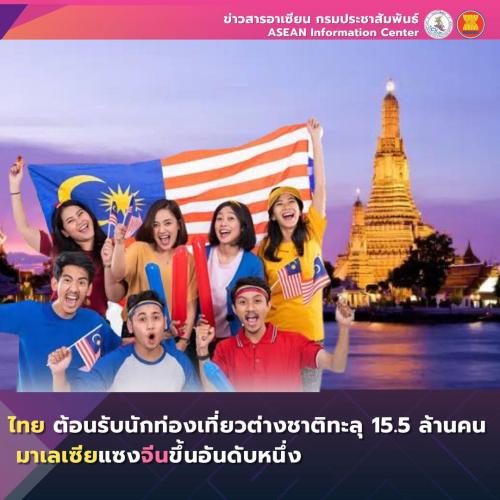




กองการต่างประเทศ
เลขที่ 9 กรมประชาสัมพันธ์ ถนนพระราม 6 ซอยอารีย์สัมพันธ์
แขวงพญาไท เขตพญาไท กรุงเทพ 10400
โทรศัพท์ 02-618 2323
Email: Saraban@prd.go.th
สงวนลิขสิทธิ์ พ.ศ.2563 กรมประชาสัมพันธ์


