
กองการต่างประเทศ
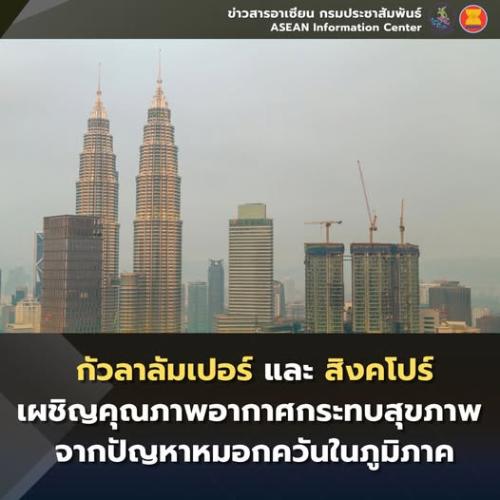
กัวลาลัมเปอร์และสิงคโปร์เผชิญคุณภาพอากาศกระทบสุขภาพ จากปัญหาหมอกควันในภูมิภาค
1/10/2569 |
38
|
กัวลาลัมเปอร์และสิงคโปร์เผชิญคุณภาพอากาศกระทบสุขภาพ จากปัญหาหมอกควันในภูมิภาค
กรุงกัวลาลัมเปอร์ของมาเลเซียติดอันดับเมืองใหญ่ที่มีมลพิษทางอากาศสูงที่สุดในโลก ขณะที่สิงคโปร์อยู่ในอันดับ 3 ท่ามกลางสถานการณ์หมอกควันที่ปกคลุมหลายพื้นที่ในเอเชียตะวันออกเฉียงใต้
โดยข้อมูลจาก IQAir ระบุว่า กัวลาลัมเปอร์มีค่าดัชนีคุณภาพอากาศ (AQI) อยู่ที่ 166 ขณะที่สิงคโปร์อยู่ที่ 155 ซึ่งอยู่ในระดับที่อาจส่งผลกระทบต่อสุขภาพ
หมอกควันปกคลุมพื้นที่ดังกล่าวมานานกว่า 1 เดือน โดยมีสาเหตุจากไฟป่าบนเกาะสุมาตราและเกาะบอร์เนียวของอินโดนีเซีย ประกอบกับสภาพอากาศร้อนและแห้งจากปรากฏการณ์เอลนีโญที่เอื้อต่อการลุกลามของไฟ ขณะที่ผู้เชี่ยวชาญระบุว่า การเผาพื้นที่เพื่อเตรียมที่ดินและการเสื่อมโทรมของพื้นที่จากกิจกรรมของมนุษย์ก็เป็นอีกปัจจัยที่ทำให้สถานการณ์รุนแรงขึ้น
สถานการณ์ดังกล่าวส่งผลกระทบทั้งต่อสุขภาพของประชาชนและสัตว์ป่า โดยกระทรวงสาธารณสุขอินโดนีเซียรายงานว่า พบผู้ป่วยโรคระบบทางเดินหายใจในพื้นที่ที่ได้รับผลกระทบจากหมอกควันแล้วกว่า 170,000 ราย ขณะที่เจ้าหน้าที่ได้ช่วยเหลือสัตว์ป่าประมาณ 100 ตัว รวมถึงอุรังอุตัง 53 ตัว ซึ่งได้รับผลกระทบจากไฟป่า
รัฐบาลอินโดนีเซียได้ระดมเจ้าหน้าที่เข้าควบคุมไฟป่า พร้อมใช้มาตรการทำฝนเทียมและปฏิบัติการทิ้งน้ำดับไฟ รวมถึงเพิกถอนหรือระงับใบอนุญาตของบริษัทที่ถูกกล่าวหาว่ามีส่วนเกี่ยวข้องกับการเกิดไฟป่าแล้ว นอกจากนี้ ประธานาธิบดีปราโบโว ซูเบียนโต ยังมีคำสั่งจัดตั้งหน่วยงานใหม่เพื่อดูแลระบบนิเวศพื้นที่พรุและป่าชายเลน รวมถึงเสริมมาตรการป้องกันและรับมือไฟป่า
นอกจากนี้หมอกควันยังคงแพร่กระจายข้ามพรมแดนไปยังมาเลเซียและสิงคโปร์ และส่งผลให้คุณภาพอากาศในบางพื้นที่ของฟิลิปปินส์และภาคใต้ของไทยลดลงด้วย
.
.
Kuala Lumpur, Singapore Record Unhealthy Air Quality Amid Regional Haze
Kuala Lumpur ranked as the world’s most polluted major city on Wednesday (Sept. 30), while Singapore ranked third, as smoke from wildfires in Indonesia continued to blanket parts of Southeast Asia.
According to IQAir, Kuala Lumpur recorded an Air Quality Index (AQI) of 166, while Singapore recorded 155. AQI readings above 150 are considered unhealthy.
The haze has persisted for more than a month, with smoke drifting from fires on Indonesia’s Sumatra and Borneo islands. Hot and dry conditions linked to the El Nino weather phenomenon have worsened the fires, while experts say human activities, including slash-and-burn land clearing and peatland degradation, are major contributing factors.
The fires have affected public health and wildlife. Indonesia’s Health Ministry reported more than 170,000 respiratory illness cases in haze-affected provinces, while authorities have rescued about 100 animals, including 53 orangutans.
Indonesia has deployed firefighters, conducted cloud-seeding and water-bombing operations, and revoked or suspended permits of companies accused of contributing to the fires. President Prabowo Subianto has also ordered the establishment of a new agency to oversee peat and mangrove ecosystems and strengthen fire prevention.
The haze has spread beyond Indonesia, affecting Malaysia and Singapore, with declining air quality also reported in the Philippines and southern Thailand.
ที่มาและเครดิตรูปภาพ/Source and Photo Credit: AFP
 รูปภาพ


คะแนนโหวต :


กองการต่างประเทศ
เลขที่ 9 กรมประชาสัมพันธ์ ถนนพระราม 6 ซอยอารีย์สัมพันธ์
แขวงพญาไท เขตพญาไท กรุงเทพ 10400
โทรศัพท์ 02-618 2323
Email: Saraban@prd.go.th
สงวนลิขสิทธิ์ พ.ศ.2563 กรมประชาสัมพันธ์


